Bathroom Remodel Cost in Northern Virginia: Real Pricing from Licensed Contractors
The first question most homeowners ask us is about bathroom remodel cost in Northern Virginia. It is a fair question, and one we can answer with real numbers from actual projects completed across Fairfax, Loudoun, and Prince William Counties.
Most Northern Virginia homeowners spend between $15,000 and $45,000 on a bathroom remodel. Master bathrooms typically start around $30,000; hall and guest bathrooms run $15,000–$20,000 or more. Those numbers reflect local labor rates, permit costs, and the materials our clients actually choose, not national survey averages.
The range exists because the scope varies considerably. A fixture refresh costs far less than a full gut renovation with new plumbing rough-in. Your specific cost comes down to bathroom size, material selections, and whether any fixtures need to be moved.
This guide draws on more than 20 years of project work across Northern Virginia by Daniel Ptak, founder of Century Bathrooms & Kitchens, to give you honest, local numbers you can actually plan around.
Bathroom Renovation Cost in Northern Virginia at a Glance
| Bathroom Type | Starting Price (NoVA) | What’s Typically Included |
| Master Bathroom | $30,000+ | Full gut, custom tile, double vanity, separate shower/tub or large walk-in shower, premium fixtures |
| Hall/Guest Bathroom | $15,000–$20,000+ | Full gut, tile surround, single vanity, tub/shower combo or walk-in shower, mid-range fixtures |
These are starting points. Final cost depends on your project’s scope, material selections, and any structural or mechanical work that surfaces during demolition.
Working with licensed contractors who pull permits and follow Northern Virginia building codes protects your investment. Unpermitted work can complicate a home sale and create ongoing liability for the homeowner.
Master Bathroom Remodel Cost ($30,000+)
For homeowners asking how much does a bathroom remodel cost in Northern Virginia, the master bathroom tends to set the baseline for the conversation. A quality master bathroom renovation here starts at $30,000 and can climb to $60,000–$80,000 or more for fully custom work.
The $30,000 baseline covers complete demolition to the studs, new plumbing rough-in with fixtures staying in existing locations, and electrical updates, including GFCI protection. Waterproofing membrane for shower areas is included at this price point and required by the current Northern Virginia code.
Mid-range fixtures include Kohler or Moen faucets, ceramic or porcelain tile, and a vanity from a quality stock line. Natural stone, designer plumbing fixtures, and custom millwork push the cost higher.
Premium Upgrades That Impact Master Bathroom Costs
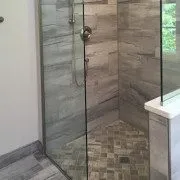
Shower conversions: Replacing a tub/shower combo with a walk-in shower runs $8,000–$12,000, covering demolition, new drain placement, waterproofing, tile work, and a glass enclosure. Adding a curbless entry costs approximately $2,000 more for the sloped subfloor work.
Double vanity: A 60-inch double vanity setup costs $3,000–$6,000 installed, including plumbing rough-in for the second sink. Custom floating vanities start at $4,000 for the cabinet alone, before countertops and sinks.
Heated floors: Electric radiant heat under tile adds $1,500–$2,500 installed for an average master bathroom. The material itself is relatively affordable; electrician labor for the dedicated circuit work and thermostat installation accounts for most of the cost.
Freestanding tub: The tub itself typically runs $1,500–$3,000, but installation adds another $2,000–$3,000 for floor reinforcement and specialized drain placement.
Typical Master Bathroom Cost Breakdown
A $35,000 master bathroom remodel breaks down roughly as follows:
- Labor: $14,000 (40%)
- Materials: $12,250 (35%)
- Fixtures: $5,250 (15%)
- Permits/disposal: $3,500 (10%)
These percentages hold fairly steady at higher price points. A $50,000 master bathroom still allocates roughly 40% to labor; higher-end materials and fixtures account for the difference.
Hall / Guest Bathroom Remodeling Cost ($15,000–$20,000+)
A quality hall bathroom remodel in Northern Virginia runs $15,000–$20,000. This includes full demolition and disposal, moisture-resistant drywall, updated plumbing valves and supply lines, and code-compliant electrical with GFCI protection. You also get a standard tub/shower unit or tile surround, a single vanity with a granite or quartz top, and a comfort-height toilet with basic chrome fixtures.
The lower price reflects smaller square footage and simpler fixtures, not reduced standards for waterproofing or code compliance. A failed shower pan costs $5,000–$8,000 to repair, regardless of which bathroom it’s in.
Common upgrades that push hall bathroom costs higher:
- Tiled shower vs. fiberglass insert: +$3,000–$4,000
- Furniture-style vanity vs. standard cabinet: +$1,000–$2,000
- Glass shower door vs. curtain: +$800–$1,500
- Recessed medicine cabinet with lighting: +$500–$800
Hall bathrooms rarely need layout changes. Keeping plumbing where it is saves $3,000–$5,000 compared to moving fixtures, and spares you from the disruption that adds nothing to how the bathroom functions.
What Drives Bathroom Remodel Costs in Northern Virginia
Several factors make the bathroom remodeling cost in our area higher than the national average. Understanding them helps you build a realistic budget and evaluate contractor quotes accurately.
-
Labor
Labor is the largest line item in any Northern Virginia bathroom remodel. A journeyman plumber bills at $125–$150 per hour; skilled tile installers charge $75–$100 per hour. These rates reflect a competitive regional construction market, not padding.
-
Tile and Surfaces
Material costs vary widely. Basic ceramic tile starts around $5 per square foot; premium natural stone runs $30 or more. Your tile and surface selections have a direct effect on total project cost.
-
Plumbing Changes
Keeping fixtures in their existing locations is one of the most reliable ways to control costs. Relocating a toilet or sink requires rerouting drain lines, potentially opening floors and ceilings, and patching everything back. Budget an additional $2,000–$5,000 for any fixture relocation.
-
Fixtures and Finishes
Vanities, faucets, lighting, and hardware vary broadly in price. Mid-range lines from Kohler and Moen keep costs manageable. Designer or custom selections add meaningfully to the budget without always changing how the bathroom functions day to day.
-
Structural and Code Work
Older homes across Fairfax, Loudoun, and Prince William Counties often need updates during a bathroom remodel: GFCI outlets, dedicated circuits, or aging plumbing supply lines. Budget an additional $2,000–$3,000 for homes built before 1990.
-
Permits and Inspections
Most bathroom remodels in Northern Virginia require permits. Typical costs run $500–$1,500 depending on scope and county.
Costs Worth Budgeting For
A few cost factors catch homeowners off guard:
- Disposal: Construction debris is charged by weight. Plan for $500–$1,000 per bathroom, more for projects with a cast iron tub.
- Asbestos testing for pre-1980 homes: $300–$500
- Lead paint protocols for pre-1978 homes: $500–$1,000
- Structural discoveries during demolition: $1,000–$5,000
- Electrical panel upgrades in older homes: $3,000–$5,000
Are Specialty Remodels Worth the Extra Cost?
For homeowners considering curbless or barrier-free showers, one of our most frequently requested upgrades, the investment in accessible design pays off in long-term livability, not just appearance. We cover the full picture, including costs, engineering, and design options, in our complete guide to curbless and barrier-free showers.
How to Budget for Your Bathroom Remodel
Three principles help Northern Virginia homeowners build a bathroom remodel budget that holds.
- Add a 10–15% contingency. Even well-planned projects encounter surprises. That buffer lets you handle them without stopping work or renegotiating your contract mid-build.
- Prioritize the bones. Plumbing, electrical, and waterproofing are not where to economize. These are the components you will live with for 20 or more years. Visible finishes like hardware and light fixtures can be upgraded later at far lower cost and disruption.
- Get a detailed, line-item estimate. A lump-sum quote tells you almost nothing about where your money is going or what you are actually comparing between contractors. Itemized breakdowns let you evaluate proposals accurately and make informed trade-offs.
If financing your remodel makes sense for your situation, ask us about options during your free consultation.
Frequently Asked Questions
How long does a bathroom remodel take in Northern Virginia?
Most projects run two to four weeks once installation begins, depending on size and complexity. Materials typically take three to four weeks to arrive at our showroom after your deposit is placed, so we build that lead time into the schedule from the start.
Do I need a permit for a bathroom remodel in Northern Virginia?
Yes. Most bathroom remodels require permits, particularly projects involving plumbing, electrical, or structural work. Requirements vary by county, and we manage the permit process for our clients as a standard part of project management.
Does a bathroom remodel increase home value?
A mid-range bathroom remodel typically returns 70–75% of cost at resale. The most reliable returns come from projects that modernize an outdated space without over-improving relative to neighborhood standards.
What’s the most cost-effective way to update a bathroom?
If a full renovation is not in the budget, refreshing fixtures, hardware, and lighting can meaningfully update the look without full demolition. A consultation is the best way to identify where targeted investment delivers the most impact in your specific space.
What should I look for when choosing a bathroom remodeling contractor in Northern Virginia?
Confirm who holds the licenses for the plumbing and electrical work. Not all contractors perform these trades in-house. Ask for references from projects in your county, since permit requirements vary across Fairfax, Loudoun, and Prince William. A detailed scope of work before signing anything is a reasonable minimum to expect from any reputable contractor.
Get a Real Quote from a Northern Virginia Bathroom Remodeler
If you are planning a bathroom remodel in Fairfax, Loudoun, or Prince William County, we are happy to walk you through a transparent, line-item quote for your specific project. Every project we take on is managed by our own team from design through installation, with itemized pricing and no surprises in the final invoice.
Call us at (703) 870-7730 or schedule a free consultation. For a full look at our bathroom remodeling services, visit our bathroom remodeling page.
About the Author
Daniel Ptak, Master Plumber & Owner, Century Bathrooms & Kitchens
Daniel is a Virginia state-licensed Master Plumber and the founder of Century Bathrooms & Kitchens. He has been remodeling bathrooms and kitchens across Fairfax, Loudoun, and Prince William Counties since 1993. His background as a licensed plumber shapes the company’s focus on durability, code compliance, and designs that hold up over time. For more on Daniel and the team, visit our About page.